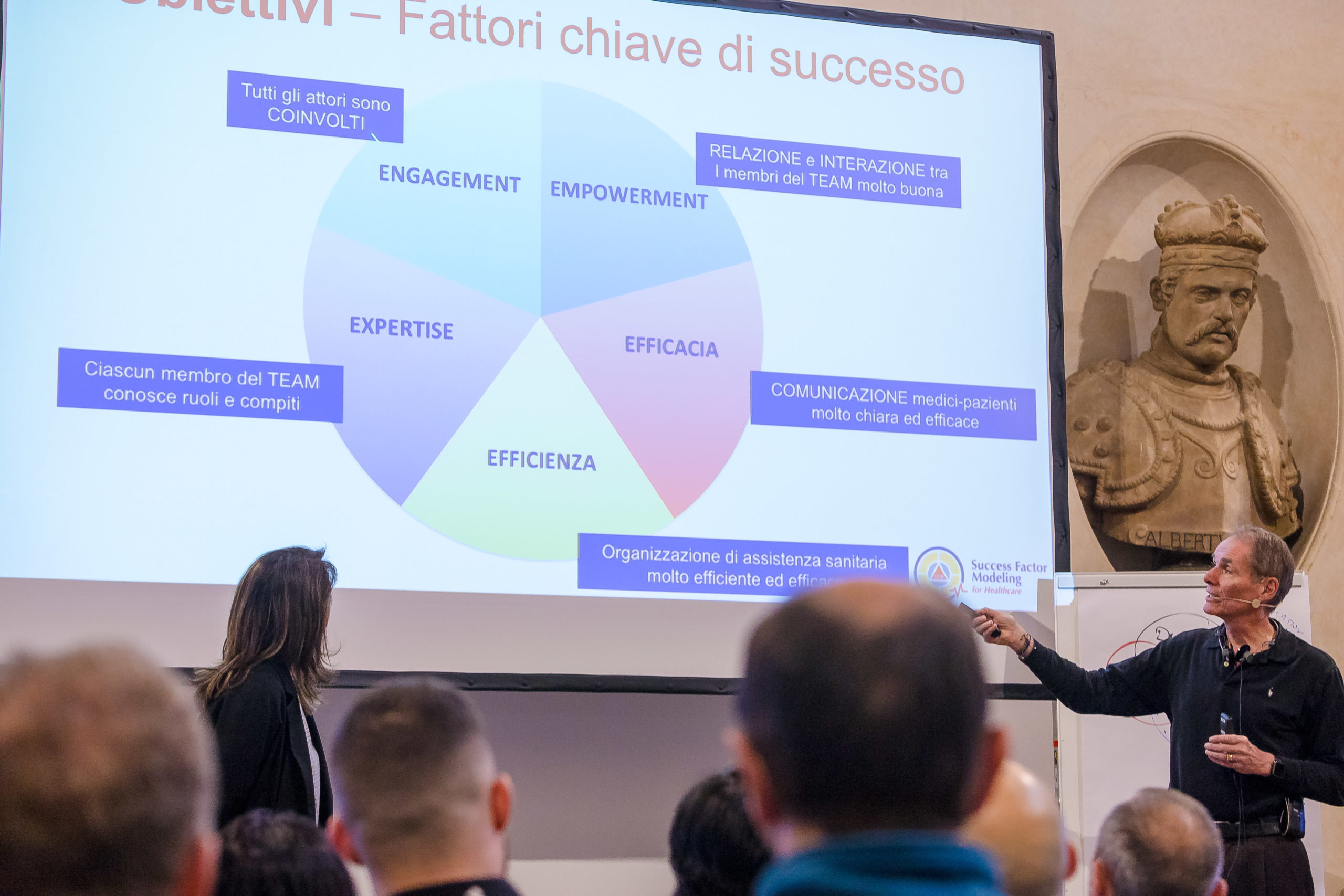
A month ago I personally presented, together with Robert Dilts, internationally renowned researcher, author and consultant, the first results of a study on success factors in the health ecosystem. The study was launched in Italy in June 2019 and is being conducted by Prof. Dilts and myself using the Success Factor Modeling methodology that he developed and that for the first time in the world has been applied in health care.
What is the difference that makes a difference in the Health System’s successful cases?
This is the question from which we started with the goal of:
● identify key factors associated with successful performance in different sectors of the health ecosystem
● map and organize key success factors into a model
● develop new assessment tools and appropriate training pathsto pass on those key success factors to others and enable their application
A month ago, during the Success factor Modeling for Healthcare event at the Center for American Studies, we presented the results of this first study period. We asked various stakeholders from different sectors of the healthcare ecosystem (Clinicians, Healthcare Professionals, Institutions, Universities and Graduate Schools, Scientific Societies, Patient Associations, Patients and Caregivers, Care Organizations and Healthcare Services…) how they define SUCCESS in the Healthcare System by asking them to think of real examples of success cases in their context, according to their perspective.
And the main success factors that emerged relate to the quality of communication with patients and the relationship between team members. Specifically, success, for the majority of responses (58 percent), is when all actors are involved, for 46 percent when the relationship and interaction in the team is very good, and for 43 percent when doctor-patient communication is clear and effective.
 In exploring the different levels of success factors, environment, actions, capabilities, values and beliefs, identity and vision/purpose, the key actions that helped determine successful cases are: protocols for communicating and addressing key issues, strong interrelationships among professionals, prescriptions for responding to special situations, involvement and collaboration, routine work and procedures.

Analyzing the level of skills and competencies, those most highlighted are communication skills (66%), problem solving (58%); on the values and beliefs level the success factors are identified in skills and updating (65% of responses) followed by the priority given to the patient (58%). Catalysts, i.e., activators of change, were indicated in 49% of the responses on the identity level – sense of mission and belonging – followed by connectors, understood as the generators of energy and connection between people (47%) while, on the vision level, the most important factor is effectively overcoming challenges and difficulties (52%).
The summary, with their respective keywords, is represented in the SFM for Healthcare model we created.
 In light of what has happened and is happening in Italy (and around the world) because of the Coronavirus, for all that has worked terms of efficiency in assisting and in a good deal of cases in healing and for all that has NOT worked, especially with regard to communication within and outside that has evidently created widespread situations of panic in the population (and beyond),
what would have gone better or can go better with adequate training, dedicated time and resources to have and follow protocols to communicate and address key issues, co-create prescriptions to respond to particular situations?
I have dwelt on these two points because they are aspects that I have heard touched on these days in various speeches by doctors, journalists, and representatives of institutions. But I believe that by dwelling on each of these factors we could have an important assessment of the strengths and weaknesses that have manifested themselves in this situation, some new awarenesses that could be a good opportunity to correct what has not worked, reinforce what has worked, and improve.
The study will continue in Italy with the reopening of the survey soon and the qualitative analysis phase of the success stories and will start in 2020 in some other countries-France, Greece, Spain and Russia.
Why this study?
Because we believe in confrontation, sharing, and constant growth.
We believe that helping to create a better world is possible.
And above all, we believe that we can do it together.
Thank you.
Emanuela